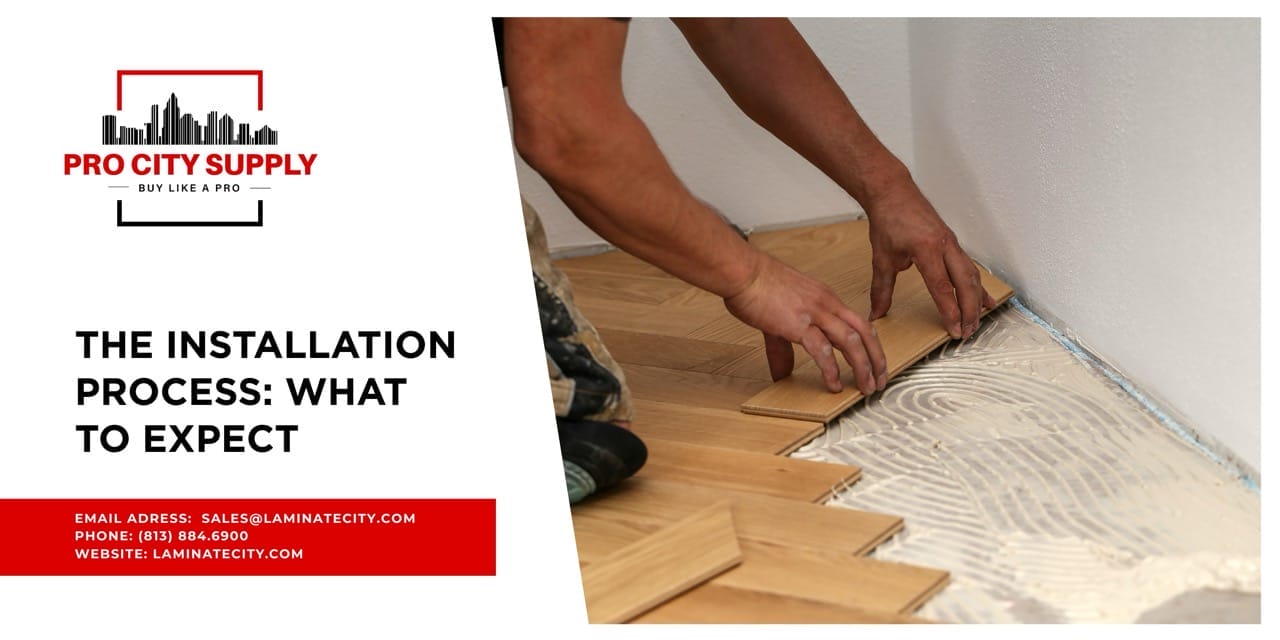
The Installation Process: What to Expect

flooring installation process Tampa, FL

Installing floors can take a lot out of you! Each material has its own processes, which can make some projects take longer than others. Are you a contractor preparing for a big job or homeowner working on a DIY project? Either way, understanding the steps involved in flooring installation can help keep you on track.

There are many flooring materials available at our flooring store in Tampa, FL. Installation can vary by product, but some steps are universal. We break them down in our comprehensive guide. Let’s cover the guide step-by-step:

Step 1: Consultation and Measurements

The first step is a flooring consultation. If you’re a homeowner, this is with a contractor or installer. Meanwhile, if you install flooring for a living, you will have an opportunity to learn about bulk orders, special pricing and product availability.

Whether you’re shopping for new flooring or working on a project for a client, this is an opportunity to get guidance on the best materials. It’s also time for measurements and to address specific concerns like moisture resistance or durability.

Step 2: Preparation

Before installing any floors, there are a few steps to take. You or your contractor should always do the following:

  • Clear the Room: Furniture and breakables should be removed from the installation area. If large or heavy items are in the way, the installation team can handle it. If not, hiring a team of movers might make sense. 
  • Subfloor Check: Before adding any new floors to a space, the subfloor has to be level and free of damage. This will give the new floors a solid, stable foundation to rest on when the time comes.

Step 3: Installation Day

The day everyone has been waiting for has finally arrived! Here’s what you need to know:

  • Material Setup: Next, the materials are brought to the job site. Some materials like SPC and laminate flooring need time to acclimate (adjust to the room’s temperatures). This ensures everything fits right.
  • Noise and Activity: Removing old flooring is noisy and dust and debris might appear. That’s why furniture in nearby rooms is often covered.
  • Installing the Flooring: Every flooring material has a unique installation method. That’s why it’s important to ensure the flooring is aligned and secured correctly.
  • Cleanup: Your contractor will clean up any mess they leave behind. Sweeping and vacuuming up debris is essential.

Step 4: Post-Installation

Following installation, your flooring should look great and function as it should. Here’s what happens next:

  • Final Inspection: Leveling, alignment and seams need to be checked. This ensures you or your client get floors that will last.
  • Finishing Touches: Lastly, the edges and transition areas are sealed and adjusted if necessary. Trim and baseboards are also installed as needed.
  • Care Instructions: Professional installers should provide maintenance advice to their clients while homeowners should receive it. 

Common Flooring Installation Challenges and Remedies

Whether you’re installing your own floors or getting help from a professional, there are few common challenges. Luckily, there are ways to solve these problems so you don’t have to worry about anything. Check them out below:

  • Uneven Subfloors: Potential repairs and leveling should be done beforehand. Installing over an uneven subfloor can shorten the lifespan of your flooring.
  • Dust and Debris: Having some dust in the air during a flooring installation is important. That’s why covering furniture and moving it to another room is essential.
  • Material Delays: When materials are delayed or on backorder, communication with your supplier or contractor matters.
  • Noise and Activity: Disruption happens during the flooring installation process, especially if old flooring needs to be removed. That’s where strategic scheduling can help.

Prepare for a Stress-Free Install

Preparation is key whether you’re installing your own flooring or hiring a professional flooring and building material supplier in Tampa, Fl to do it for you. It helps avoid any surprises and makes the process smoother for everyone involved. Whether you’re a contractor or DIYer, Pro City Supply has the supplies you need for your next project. As experienced trades experts, we know what it takes to succeed.

Remodeling your home or working on a project for one of your clients? Contact us or visit our Tampa or Orlando showroom to get started.

Latest Posts

Not all flooring is priced low for the same reason. What looks like a deal can turn into a nightmare three months into a job. Some look expensive, but are more than what you need. What’s the difference between cheap flooring and value flooring? It’s one of the valuable things anyone working in the industry or buying flooring can learn. Whether you're a contractor, homeowner or a flipper, trying to hit your number without cutting corners can hurt you later. Let’s get into what drives flooring prices and where the real cost shows up. What Makes Flooring Cheap in the First Place? Flooring prices are determined by several factors. The most common ones include: Wear Layer Thickness: The wear layer is the protective coating on top of SPC and LVP flooring. Budget products are 6 mil or less. Professional-grade products start 12 mil and go up. Durability makes a difference over time. Core Construction: A thin or unstable core will cause the floor to flex, shift or telegraph subfloor imperfections. Quality SPC cores are denser, heavier and more dimensionally stable. Finish Quality: Cheaper products have a lower-grade UV coating, this shows wear faster and is harder to clean without dulling. Certifications and Testing: Reputable products have FloorScore, GREENGUARD or similar certifications. Budget flooring doesn’t usually have these and clients need to know when they ask. Where It’s Sourced: Direct-from-manufacturer pricing gives you a better product for a lower price. When a product passes through two or three distributors before reaching a store shelf, you’re paying for that chain. Cheap flooring isn’t always bad. It’s just important to know what you’re buying and where it’s going. When Does Cheap Flooring Cost You More? It’s easy to choose cheap flooring because of the low upfront costs. However, it’s also easy to get burned. Here’s an overview: For Contractors When a floor fails right away, you get an angry callback. This can cost you time, materials and if the client talks, your reputation. Cheap flooring installed in the wrong place (i.e. wrong wear layer for a rental unit or wrong core for a slab with moisture issues) will fail. The client won’t blame the product, they will blame you. For Homeowners The true cost of flooring isn’t just what you pay at the counter. You have to add in the installation cost, the removal cost if it fails early and the replacement cost if it fails within five years instead of fifteen. A product that costs $0.30 less per square foot can easily set you back thousands more over time. For Flippers If you’re buying to sell, durability matters. Flooring that buckles before closing or that a home inspector flags as problematic can create delays or kill a deal. On the other end, over-specifying for a flip or using premium hardwood in a rental-grade renovation can destroy your margin just as fast. Spending the most shouldn’t be a goal. At Pro City Supply, we get that. Our Tampa building material suppliers help customers throughout Tampa, while our Orlando building material store helps Orlando customers find the right products for their projects. When you choose us, you’re buying from a trusted source you can rely on. . What Numbers Actually Matter? When you’re considering a flooring store in Tampa or flooring store in Orlando, you have to look at the product’s specs before the price tag. This means looking into the following: Wear Layer: Choose a 12 mil minimum for residential properties and 20 mil+ for heavy traffic or rentals. Total Thickness: As a rule of thumb, 5 mm is entry-level and 8 mm+ gives you better sound and stability. Core Type: SPC (Stone Polymer Composite) is the standard for dimensional stability so it doesn’t expand and contract like older LVP does in the Florida heat. Warranty: A 10-year residential warranty is reliable. A lifetime warranty on a $0.49/sq. ft. product means nothing. In-Stock Consistency: If you’re working on a 1,200 sq. ft. job and you run out of product mid-install, you have an issue. Verify lot availability before you commit. Price is the first thing you see, but it’s not the only number that matters. If you want to buy like a pro, you have to look at the product specs. How Do Pros Actually Buy? Experienced contractors don’t walk into a big-box store and grab whatever’s under the sale sign. They have a source they trust where they consistently know what’s in stock. They know the specs without having to read the back of a box so they can buy at prices that make money, not just cover materials. Buying where the pros buy makes a difference. Pricing protects contractor margins. The inventory is deep enough to handle real jobs and the people behind the counter know the trade so you’re never explaining what an SPC core is to a part-time associate. Ready to Buy Like a Pro? Are you a seasoned installer, doing your first renovation or turning investment properties for a living? Buying smart goes beyond looking at the price tag. It means knowing your specs, matching product to application and sourcing from a reliable supplier like Pro City Supply so you aren’t short on the job site. Want flooring that will last? Contact us or visit one of our showrooms today!

Not all flooring is priced low for the same reason. What looks like a deal can turn into a nightmare …

Countertop Fabrication Costs Explained

A countertop quote can add up fast so it’s important to know what you’re paying for. When you don’t, your …

Why Flooring Prices Vary So Much

Flooring prices are all over the place! One luxury vinyl plank (LVP) might set you back $2 per square foot, …

REQUEST A QUOTE