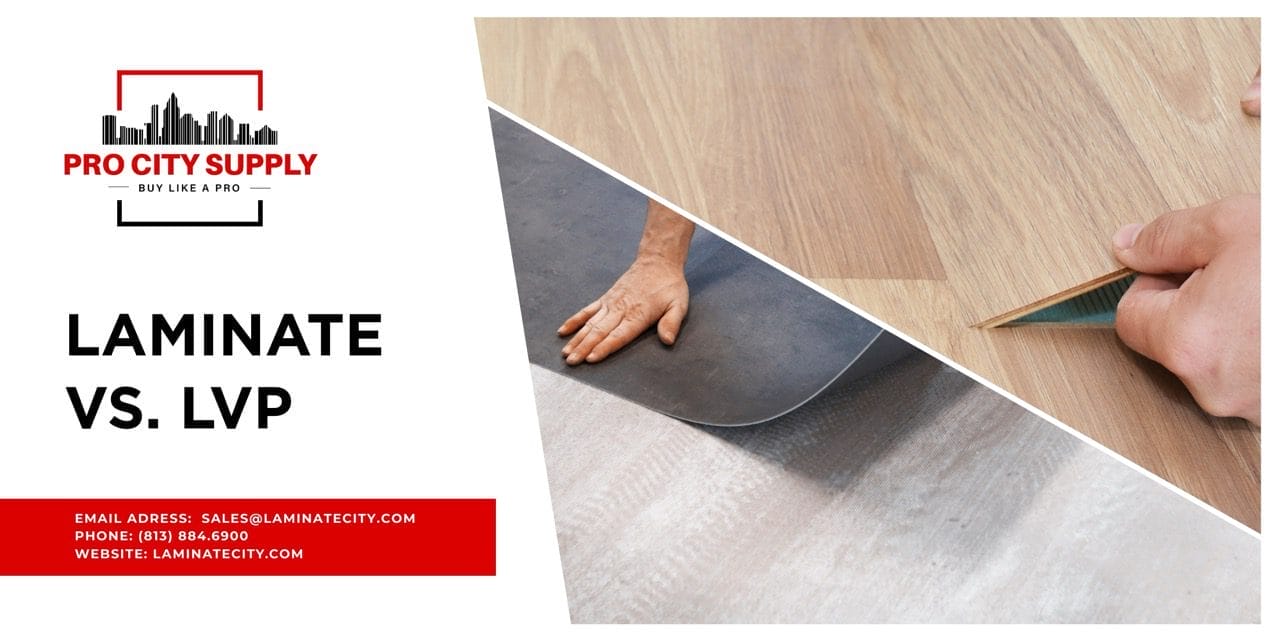
Laminate vs. LVP

laminate vs LVP flooring

Trying to choose the right flooring products in Tampa, FL for your home or a material for your next job site? At this point, you’ve likely narrowed it down to two options: laminate and luxury vinyl plank (LVP). Both are great in their own ways. However, the right one for you won’t be the same as someone else. You’ll need to take factors like wear and tear, moisture exposure and your budget into account.

As the most trusted building material store in Tampa, we understand that Florida living comes with humidity, sandy shoes, and the occasional splash zone. That’s why it’s important to know the differences between your flooring options. Let’s find out which one is the best fit for your space. 

The Difference Between Laminate and LVP

Let’s go over the basics first. Laminate and LVP are similar since they both mimic the appearance of real wood. However, they are made of different materials and perform differently.

Laminate flooring consists of compressed, sometimes recycled wood fibers and has a printed top layer. It offers that classic wood look for a great price. It works in dry areas and is easy to install.

Luxury vinyl plank (LVP) is known for its layered construction. It has a wear layer, dense waterproof core and strong backing. It’s great for moisture-prone areas like kitchens and bathrooms. 

Comparing Durability

Need to install flooring in a busy home or high-traffic space? When you do, durability matters. This is especially true in Central Florida where it’s hard to avoid moisture. Your flooring should stand up to heat, humidity and other messes.

Let’s compare the two, starting with laminate. If offers the following:

  • A tough surface that’s vulnerable to water damage if moisture gets into the seams
  • Scratches over time
  • Thrives in dry areas like bedrooms, offices or living rooms

Now, let’s move on to LVP. Check out its qualities:

  • Withstands water damage, reducing stress in kitchens, bathrooms and basements
  • Stands up to the regular wear, including kids and pets running around
  • Works well in humid environments

On the hunt for flooring that stands up to water and wear? LVP comes out on top. We will discuss the costs and value each flooring type can bring to your space next.

The Better Value

Both homeowners and contractors have a set budget. Laminate and LVP are affordable. However, there’s a difference in what you get for the price. 

If you’re looking for a great value, laminate is the way to go. Here’s why:

  • Lower cost per square footage
  • Covers large spaces on a tight budget
  • Delivers a signature look without a hefty price tag

If budget is important, LVP can also provide value. Here’s what you need to know:

  • Slightly higher upfront costs
  • Saves money over time with additional durability and fewer repairs
  • Works better in high-traffic or wet areas

When it comes to price, laminate wins! However, LVP provides more long-term value. We will dive into which one is best for you next. 

Determining Which Floor Makes Sense for You

Still thinking about it? That’s completely normal whether you’re a homeowner or contractor helping your clients. Let us give you a quick overview to make your decision a bit easier. 

What’s great about laminate flooring? Choose it if you’re looking for the following:

  • You need flooring for a dry area like a bedroom or office
  • You have a tight budget, but want a wood look
  • You are okay with taking more care to prevent moisture damage

Maybe you’re leaning towards LVP instead. Go with this option if you’re after the following:

  • You need flooring for a kitchen, bathroom or basement
  • You want the peace of mind that comes with water resistance and durability
  • You live in a high-traffic home or are working on a rental property

When it comes to making a decision between laminate and LVP, the right one for you depends on your needs. Take your style, budget and durability needs into account to make the right decision.

Choose Flooring That Works For You!

When you live in Tampa, laminate and LVP flooring are both great options. It comes down to your needs and preferences. If you want to buy like a PRO, we can help. Pro City Supply, your trusted building material and flooring retailer, is the place to be when it comes to laminate and LVP flooring.

Visit one of our showrooms or contact us to find the perfect flooring for your next project!

Latest Posts

Not all flooring is priced low for the same reason. What looks like a deal can turn into a nightmare three months into a job. Some look expensive, but are more than what you need. What’s the difference between cheap flooring and value flooring? It’s one of the valuable things anyone working in the industry or buying flooring can learn. Whether you're a contractor, homeowner or a flipper, trying to hit your number without cutting corners can hurt you later. Let’s get into what drives flooring prices and where the real cost shows up. What Makes Flooring Cheap in the First Place? Flooring prices are determined by several factors. The most common ones include: Wear Layer Thickness: The wear layer is the protective coating on top of SPC and LVP flooring. Budget products are 6 mil or less. Professional-grade products start 12 mil and go up. Durability makes a difference over time. Core Construction: A thin or unstable core will cause the floor to flex, shift or telegraph subfloor imperfections. Quality SPC cores are denser, heavier and more dimensionally stable. Finish Quality: Cheaper products have a lower-grade UV coating, this shows wear faster and is harder to clean without dulling. Certifications and Testing: Reputable products have FloorScore, GREENGUARD or similar certifications. Budget flooring doesn’t usually have these and clients need to know when they ask. Where It’s Sourced: Direct-from-manufacturer pricing gives you a better product for a lower price. When a product passes through two or three distributors before reaching a store shelf, you’re paying for that chain. Cheap flooring isn’t always bad. It’s just important to know what you’re buying and where it’s going. When Does Cheap Flooring Cost You More? It’s easy to choose cheap flooring because of the low upfront costs. However, it’s also easy to get burned. Here’s an overview: For Contractors When a floor fails right away, you get an angry callback. This can cost you time, materials and if the client talks, your reputation. Cheap flooring installed in the wrong place (i.e. wrong wear layer for a rental unit or wrong core for a slab with moisture issues) will fail. The client won’t blame the product, they will blame you. For Homeowners The true cost of flooring isn’t just what you pay at the counter. You have to add in the installation cost, the removal cost if it fails early and the replacement cost if it fails within five years instead of fifteen. A product that costs $0.30 less per square foot can easily set you back thousands more over time. For Flippers If you’re buying to sell, durability matters. Flooring that buckles before closing or that a home inspector flags as problematic can create delays or kill a deal. On the other end, over-specifying for a flip or using premium hardwood in a rental-grade renovation can destroy your margin just as fast. Spending the most shouldn’t be a goal. At Pro City Supply, we get that. Our Tampa building material suppliers help customers throughout Tampa, while our Orlando building material store helps Orlando customers find the right products for their projects. When you choose us, you’re buying from a trusted source you can rely on. . What Numbers Actually Matter? When you’re considering a flooring store in Tampa or flooring store in Orlando, you have to look at the product’s specs before the price tag. This means looking into the following: Wear Layer: Choose a 12 mil minimum for residential properties and 20 mil+ for heavy traffic or rentals. Total Thickness: As a rule of thumb, 5 mm is entry-level and 8 mm+ gives you better sound and stability. Core Type: SPC (Stone Polymer Composite) is the standard for dimensional stability so it doesn’t expand and contract like older LVP does in the Florida heat. Warranty: A 10-year residential warranty is reliable. A lifetime warranty on a $0.49/sq. ft. product means nothing. In-Stock Consistency: If you’re working on a 1,200 sq. ft. job and you run out of product mid-install, you have an issue. Verify lot availability before you commit. Price is the first thing you see, but it’s not the only number that matters. If you want to buy like a pro, you have to look at the product specs. How Do Pros Actually Buy? Experienced contractors don’t walk into a big-box store and grab whatever’s under the sale sign. They have a source they trust where they consistently know what’s in stock. They know the specs without having to read the back of a box so they can buy at prices that make money, not just cover materials. Buying where the pros buy makes a difference. Pricing protects contractor margins. The inventory is deep enough to handle real jobs and the people behind the counter know the trade so you’re never explaining what an SPC core is to a part-time associate. Ready to Buy Like a Pro? Are you a seasoned installer, doing your first renovation or turning investment properties for a living? Buying smart goes beyond looking at the price tag. It means knowing your specs, matching product to application and sourcing from a reliable supplier like Pro City Supply so you aren’t short on the job site. Want flooring that will last? Contact us or visit one of our showrooms today!

Not all flooring is priced low for the same reason. What looks like a deal can turn into a nightmare …

Countertop Fabrication Costs Explained

A countertop quote can add up fast so it’s important to know what you’re paying for. When you don’t, your …

Why Flooring Prices Vary So Much

Flooring prices are all over the place! One luxury vinyl plank (LVP) might set you back $2 per square foot, …

REQUEST A QUOTE